
The Void SystemTM
While most companies chase the next lock, the next exotic material, the next surface pattern, we stepped back and looked at the one component every knife depends on — the axis.
The pivot.
And what it would mean to rethink it completely.
Not to remove rotation.
But to remove the assumption of how rotation has to be built.
For decades, the pivot has been treated as simple hardware — a bolt clamping parts together, hidden between scales, accepted as solved. It functions. It’s familiar. It’s rarely questioned.
We questioned it.
What if the pivot wasn’t just a fastener?
What if it became a structural principle?
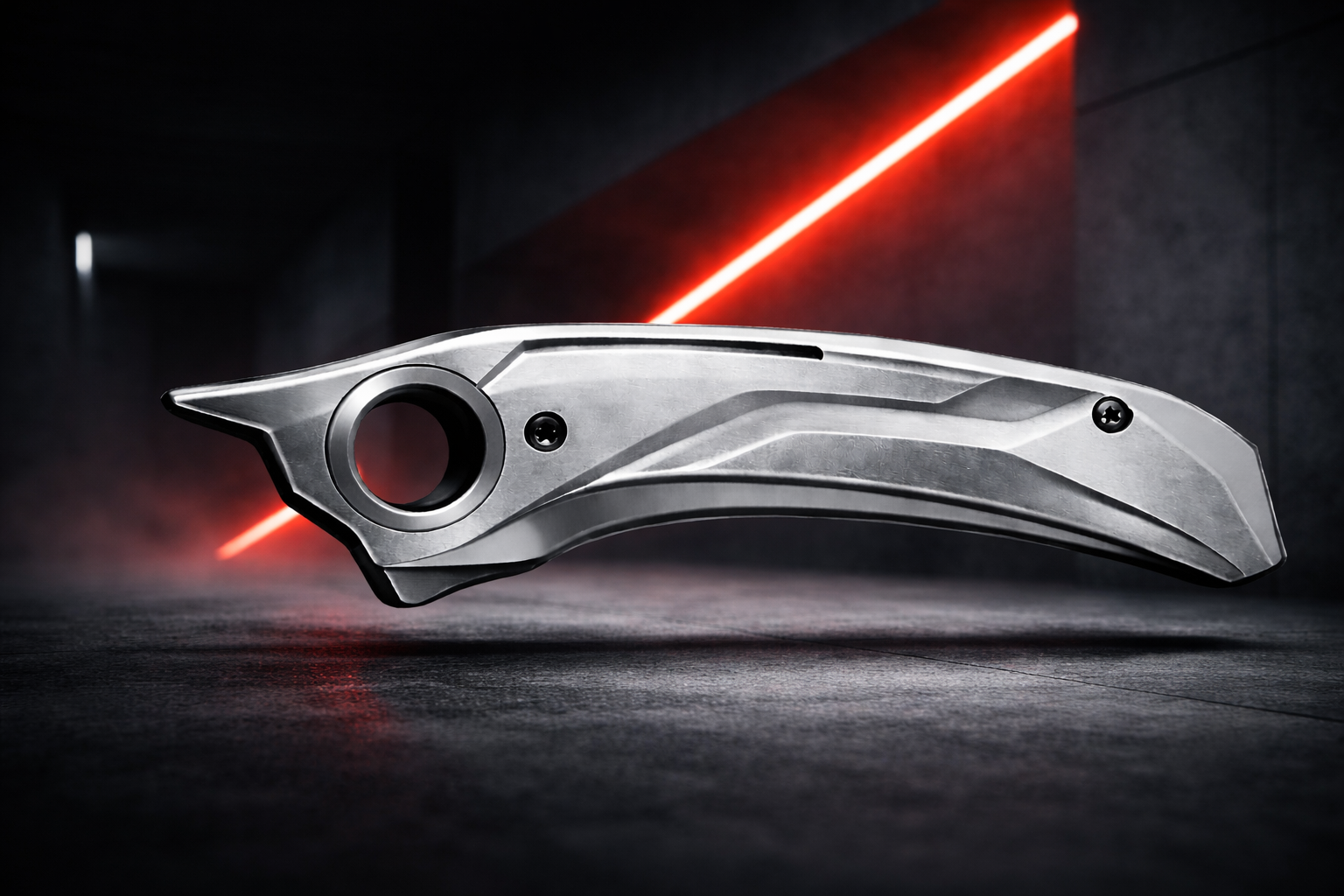
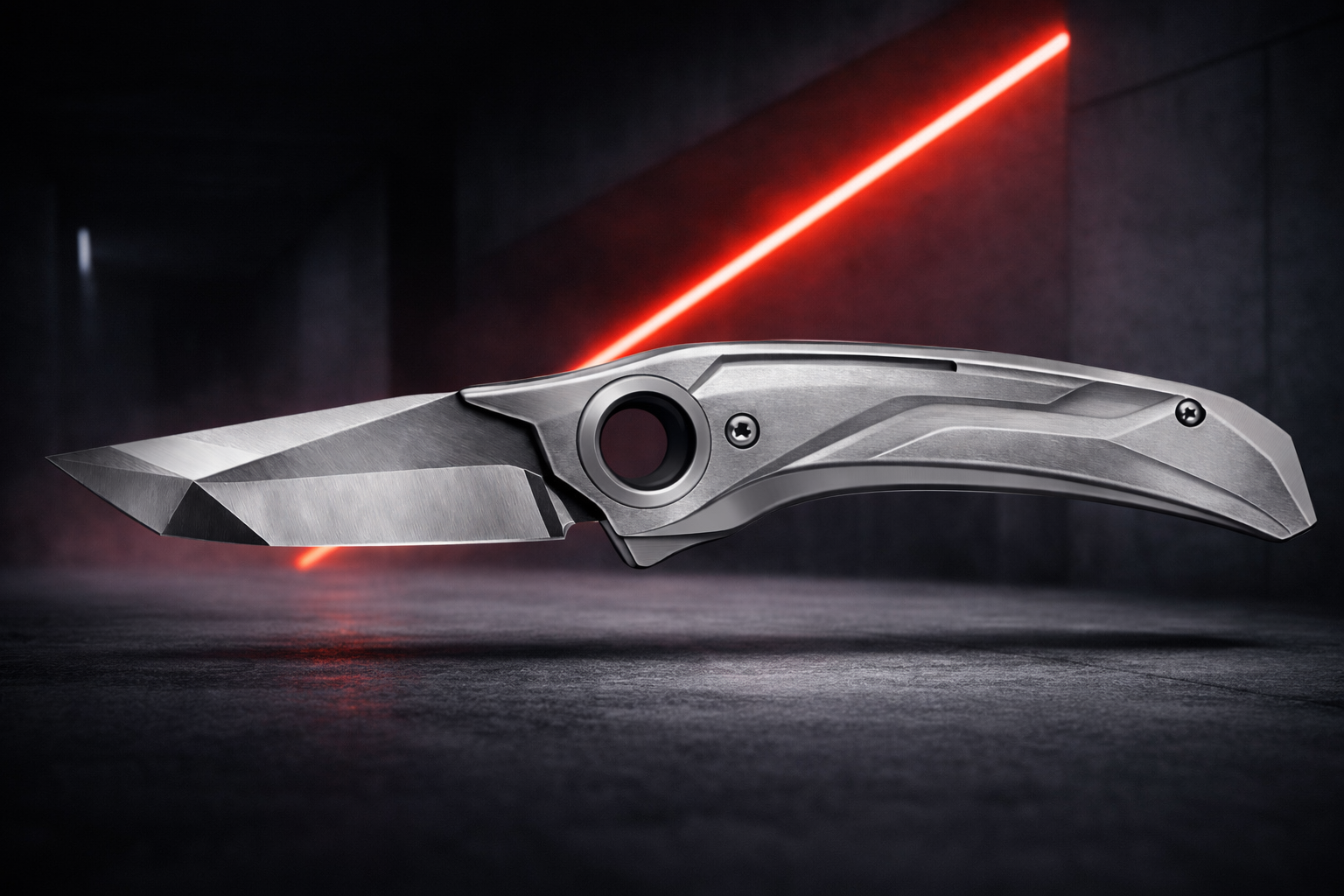
The Void System reframes the center of the knife as engineered architecture. The negative space is intentional. The load path is reconsidered. The forces are managed, not merely contained.
Instead of stacking parts around a bolt, the design begins at the axis and radiates outward. The pivot is no longer a passive connector — it becomes the defining geometry of the entire knife.
This isn’t cosmetic innovation.
It’s mechanical disruption.
By rethinking the heart of the knife, everything else changes — the structure, the balance, the identity.
When you change the axis,
you change the machine.
The Void System is built around a patented half-inch diameter dual-threaded barrel with two precision shoulders.
Not a bolt.
Not a spacer.
A structural spine.
The first liner threads onto the barrel and establishes the foundation. The washer, bearing system, and blade are seated against the primary shoulder — not floating, not clamped blindly, but indexed with intent.
The second liner threads in from the opposing side. As it advances, both liners draw inward against the barrel’s shoulders, compressing into a unified internal chassis. The core locks itself together from the center outward. The stop pin slides into its recess.
The load path is controlled.
The axis is defined.
The structure becomes singular.
Then the architecture closes.
The integral titanium handle sleeve slides over the liners along a milled rail system — guided, aligned, contained. It travels until it meets the end stop, where it becomes more than a cover. It becomes reinforcement.
Finally, the exterior sleeve is fixed to the liners, locking the entire assembly into one rigid system.
No scale stack-up.
No decorative layers hiding hardware.
No cosmetic complexity.
Everything begins at the axis.
Everything radiates from it.
This isn’t a new finish.
It’s a new foundation.